
I keep returning to the truth that many of us are still here because of the care and creativity that never made headlines. Because of the insignificant decisions that are made every day: to share food, to warn another, to adapt, to move carefully, to hide, even to remember. We are here because of imaginative acts that made survival possible under conditions that were never meant to sustain us.
Contributor bio
Nakasi is a multi-situated edgeworker who is living, learning and loving across communities, disciplines and countries. She coordinates the day-to-day movements of otherWise, grounding our operations in care and coherence. Nakasi co-leads our Edgework learning arc, bridges across programs and platforms, and holds space for hard conversations with warmth, clarity, and integrity.
I almost didn’t write this.
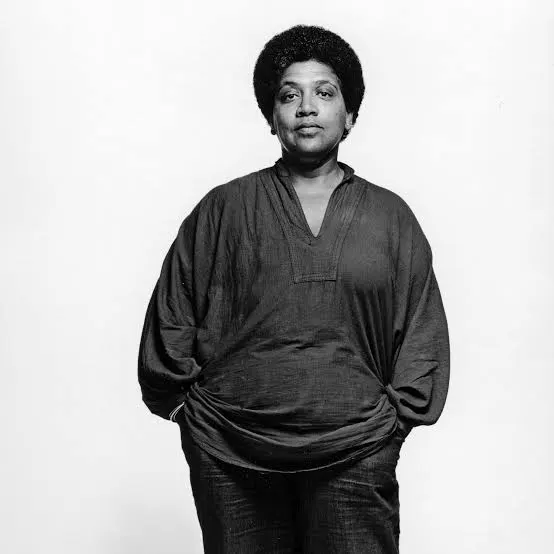
Some things feel too tender, too heavy to touch while the world is burning. But that tension kept pressing on my chest, asking to be named. So I took a page from Audre Lorde and decided against swallowing the silence or the truth.
I feel like a hypocrite.
I’m sitting here, planning this cycle about creativity and care, while people are being murdered, families are being torn apart, others are living in absolute fear that at any moment they too could fall victim to a system that outwardly and proudly shows it disdain for you and those who look like you, love like you, or move through the world in ways it has deemed disposable.
I feel like a hyprocrite because at any moment, this could be me. It could be my husband. Or it could be both of us.
And yet, here I am, writing about care and creativity as survival literacies.
I watch as the news breaks that my brothers and sisters across several Caribbean islands will now be faced with a visa ban beginning in a few short weeks. Just so. With the stroke of a pen. With language that is as cold as the temperature outside my window. Bureaucratic and violently indifferent. And for a few minutes, I think to myself “wha would ‘appen if they returned the favour?”. What if borders hardened in both directions just to show that we will not accept dehumanization in such a way? What if movement, something that is already so uneven and policed, became even more cruel? What would that look like?
And then something else settles in.
“We are here because of imaginative acts that made survival possible under conditions that were never meant to sustain us. Like this present moment for me.”
This isn’t new. Many moons ago Martin Carter, the Guyanese poet and political activist, wrote:
“This is the dark time, my love. It is the season of oppression, dark metal, and tears. It is the festival of guns, the carnival of misery. Everywhere the faces of men are strained and anxious.”
None of this is new, nor is it the exception. What we are witnessing and living through is an intensification. A more glaring revealing of sorts. These are the dark times continued.
Borders have always been used as tools of sorting. Visas have always been instruments of control. I’ve always wanted a blue passport, but more specifically, a US passport. Not because I wanted to live in the USA but because I wanted the privilege that the US passport allows. Do you know how many countries you can travel to without a visa? Without harassment? Simply because you have a US passport? How that small blue book can mean the difference between ease and suspicion, acceptance and refusal. How it can determine whether your body is read as neutral or threatening before you even open your mouth? How you’re treated as less than simply because of the color and country of your passport?
I’ve always been acutely aware of what passports do. Of what borders do. Of how movement is a privilege that is unevenly distributed along the fault lines of race, empire and a cruel history. And so when I hear about visa bans, I don’t just hear policy. I hear the echo of older logics that decide who is worthy of mobility and who must remain contained. Sylvia Wynter, the Jamaican novelist, critic, philospher and essayist, reminds us that the modern world is organized around “the overrepresentation of Man as if it were the human itself.” Forget the fact that many of these countries who heavily scrutinize citizens of “less-developed” countries are only able to be as “powerful” and as well-resourced as they are because of the very resources they’ve managed to extract from said countries.
And so I ask myself, honestly, “who am I to write about care and creativity right now?”
Because, to me, care and creativity feel painfully small in this moment. It feels almost insulting in the face of state-sanctioned violence and systemic cruelty. If I am being honest, there is a part of me that wants to abandon the language altogether. To reach for something sharper and louder. Something that feels proportionate to the harm.
And yet, they both keep insisting. Care and creativity. They keep coming back to me and they are asking me to consider them in this particular moment, at this particular time in history. I don’t think they are either solutions or even soft distractions. Nor do I think of them as a way to bypass the rightful grief and anger that one is inclined to feel. I consider them more as orientations.
I keep returning to the truth that many of us are still here because of the care and creativity that never made headlines. Because of the insignificant decisions that are made every day: to share food, to warn another, to adapt, to move carefully, to hide, even to remember. We are here because of imaginative acts that made survival possible under conditions that were never meant to sustain us. Like this present moment for me.
I suppose care, in this sense, is a refusal to allow cruelty to be the only organizing force in our lives. To meet that cruelty with tenderness. And creativity, at least the kind I am speaking of, is in our responsiveness. Its in making something livable out of what we have been handed. About staying with the trouble.
This is where the Creative Care cycle begins.
There is no certainty here. I am just sitting in and with the discomfort and contradictions (because really, the larger question is why am I CHOOSING to remain in a place that does not want me here?). And with the uneasy knowing that something is unraveling and something else has not yet fully taken form. I am sure, in some way, you feel it too. That we are living at multiple edges all at once – ecological, spiritual, emotional, political and everything in-between.
The first circle in this cycle asks us to widen our understanding of care beyond the personal. To see how care has always been collective and shaped by our different cultures and histories. To notice survival has rarely been an individual achievement and almost always a shared practice. Especially for those of us who live at the edges.
The second circle invites us to go a bit deeper and explore the edge effect. In ecological terms, the edge effect refers to what happens at the boundary between two ecosystems. These edges are often places of adaptation, experimentation and, as to be expected, heightened diversity. Life behaves differently there. I have come to understand that many of us are living at these kinds of edges, whether we chose them or not. And in this circle, we will sit with the edge and ask what becomes possible when we stop rushing toward resolution and instead allow emergence to do its slow and uncertain work. We explore how care steadies us at the edge, and how creativity helps us orient ourselves when the ground beneath us feels unrecognizable.
The third, and final, circle within this cycle moves us away from what is happening and more toward how we respond. If care and creative are survival literacies, and if edges are sites of emergence, then what roles are we being asked to play in the reWorlding that is already underway? Not savior roles. Roles like witness, listener, seed-keeper, story-holder.
These circles are offered as invitations to sit with complexity rather than flee from it and to honor what is breaking without letting it be the only story. They are an invitation to remember that care and creativity have always been part of how people survive, how they heal, how they resist and how they remake worlds, even under impossible conditions.
I am still wrestling. Still questioning and still unsure about many things. The rage is strong. The hurt is stronger.
And yet.
The sky hasn’t collapsed on us as yet.
Which does not mean things are fine. Nor does it mean that we are safe. The violence is real. The grief is sharp. Yet life continues to insist on itself. And so do we.
I do not get to opt out of care nor do I get to abandon creativity. If anything, this is when both are more demanded of me. It is my responsibility.
It was Thomas Sankara, the late President of Burkina Faso and Pan-Africanist revoluntionary, who said “You cannot carry out fundamental change without a certain amount of madness. In this case, it comes from nonconformity, the courage to turn your back on the old formulas, the courage to invent the future. It took the madmen of yesterday for us to be able to act with extreme clarity today. I want to be one of those madmen. We must dare to invent the future.”
So maybe this is madness. To choose care when cruelty would be so easy. To choose creativity when despair wants to take my breath away. And if this is madness, then so be it. As Trinidad Madman says “Ize a madman.”