
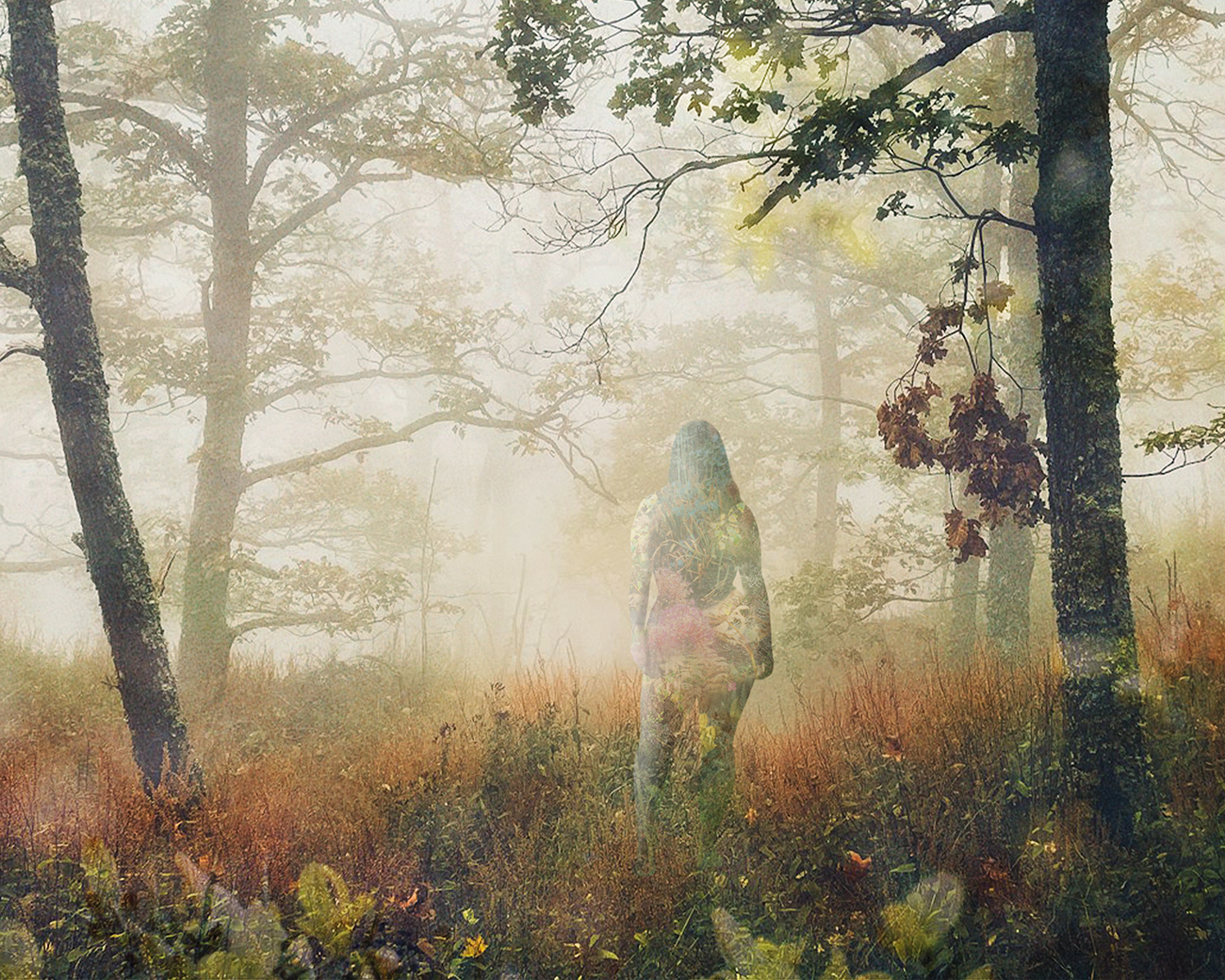
In this personal essay, otherWise’s founding Weaver, Nicole Civita, reflects on her journey of belonging and making home. From being claimed by the Alaskan Muskeg to grounding her family in Vermont’s green hills, Nicole takes us on a journey of becoming of a place. For her, this is less about finding the perfect place than about learning how to be-long wherever you are, while being an active participant in the enlivenment of that place. “It asks for attention, intention, agency and devotion. For repair and reciprocity”, Nicole continues. “It asks us to remain both permeable and protective. Rooted and moving.”
Contributor bio
Founding Weaver of otherWise, Nicole is a complexity thinker, relation-shifter, and paradigm midwife committed to cultivating nourishment, enoughness, and mutual learning. She tends the rhythms and realities of otherWise with grounded discernment and deep devotion.
Why is it always “Where?”
It might be my least favorite question. So innocuous. Easy enough small talk.
“So, where are you from?”
I am a member of the Xennial micro-generation (or an Elder Millennial, if you must) who has lived her entire life in the U.S.A. My adolescent obsession with the performing arts and vocal training made it possible to straighten out the cartoonish outer-borough accent I picked up as talkative toddler in Queens. My SPF50-dependent skin and television-ready diction virtually guaranteed that the question was rarely posed in bad faith or on the basis of a suspicion that I didn’t belong.
And still, it’s a question that makes me stammer every time.
“Do you mean where I was born? Where I went to high school? Where I lived the longest? Where I live now?” I query back, hoping to overwhelm the asker with enough variations on the question that they lose interest in getting an answer.
Up to you. Where’s home?
Damn it. That’s an even worse question. Because if I answer honestly — nowhere — I’ll have breached the polite norms of small talk. And if I choose from the list of places that were once at the end of my residential address, I’ll have implied something untrue.
“Well, the first 22 years of my life unfolded within a twenty-mile radius of the George Washington Bridge. And for a big slice, I probably would have claimed to be a New Yorker. But it isn’t home. I don’t think it ever was.”
Considering my personal history, most people would likely reply: I’m from New Jersey. Kindergarten through High School.
But I’ve never eaten a Taylor ham, egg, and cheese on a hard roll. I don’t remember what exit I’m from. And though I spent most of the 1990s in Bergen County’s finest restaurants, nail salons, and legendary shopping malls, I never felt comfortable in them. As soon as I could, I crossed that bridge and tried hard to avoid coming back. College allowed me to split from the suburbs and reclaim my status as a New Yorker. That identity carried a particular charge. To be from New York meant you were unafraid, bold, quick-witted, savvy, and open to everything. A little superior, too. If you could make it there, the song promised, you could make it anywhere.
But after a few years of “making it,” I started to suspect that I was the victim of an elaborate scam. Why, I wondered, am I proud to claim allegiance to a place where daily living is a high-intensity competitive sport? Why does it always feel like I have to “make it” all over again tomorrow? Exhausted by the hustle, sick of the subway stench, and tired of having the hems of my pants soaked in those gross, grey-brown, greasy puddles at every intersection, I decided to put that promise to the test. Anywhere, really?
Okay. How about Alaska?
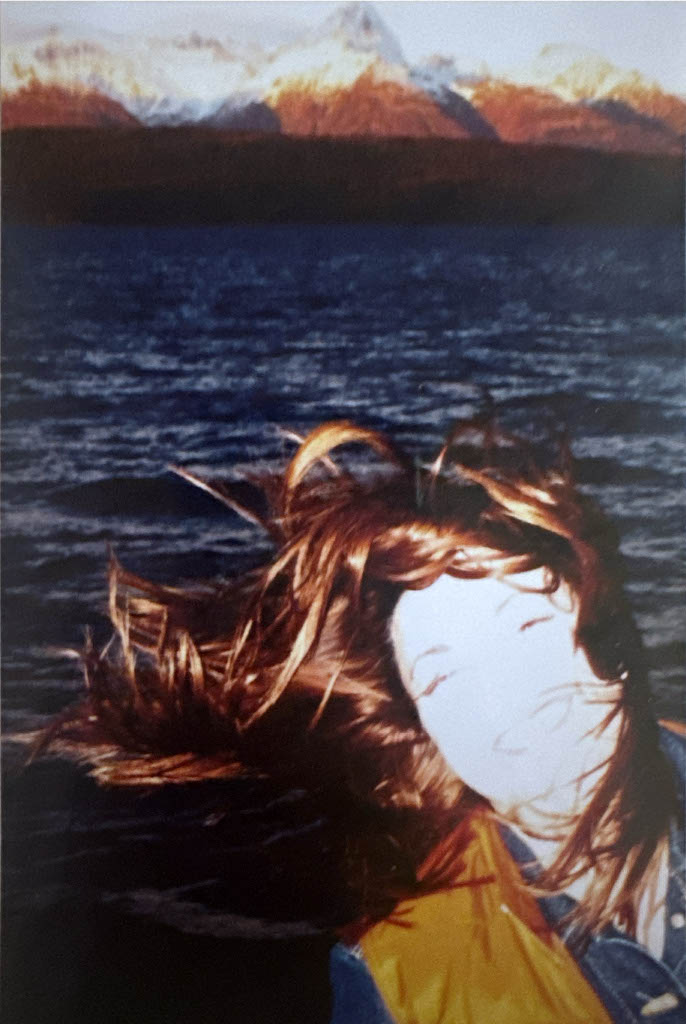
“I quickly learned that the muskeg’s symphony of decomposition demands that the living offer their attention. Once offered, the attention enlivens.”
Meeting the Muskeg
At 22, I moved to Sitka (Sheetʼká) — a small fishing town on Baranof Island where the Pacific Ocean laps into the Tongass National Forest. The outside edge of the Inside Passage. The forest pressed close to town, leaving space for just one main road between it and the Sitka Sound. About 14 miles, end-to-end. Then vast temperate rainforest, salmon-silvered rivers, and captivating coves beyond. To the surprise of just about everyone I’d ever met, I traded a city of 8 million people for an island with 8 thousand people (and nearly as many brown bears).
If I had truly hoped for dry pant-legs, I’d made the wrong choice. In Sitka, the rain falls with mythic persistence. When it stops, so does every other routine thing. It was acceptable (or at least expected) for employees to call out “sunny” and skip work. On one such sun-day, I met the muskeg. That’s when I really realized that what it meant to be held by a place. To be saturated and still sink deeper.
For the uninitiated, a muskeg is, more or less, a bog. A peat-forming ecosystem found in boreal and Arctic areas with a high water table. The word appears to be derived from Cree maskek and Ojibwa maškik. Juneau writer Vivian Faith Prescott describes the muskeg well:
Hairy rhizomes, creeping stems, twisted tree trunks, drooping cones, scaly and gray-barked trees flourish around me. Muskeg life is wet, mushy, juicy, fleshy, tangy, glabrous, globose and glandular. The bog is prickly and sticky, where plants catch bugs to devour them and deep dark ponds catch humans and animals. Despite its danger, I love it all… The muskeg is one big medicine blanket.
I quickly learned that the muskeg’s symphony of decomposition demands that the living offer their attention. Once offered, the attention enlivens.
But in the seconds just before the lesson, I remember a flash of disappointment. As I rounded a curve of the forested Starrigavan trail, unusually walking out ahead of my companions, a boardwalk appeared. It seemed garishly out of place. Boardwalks were a feature of the Jersey shore, not the Alaskan wilderness! As an indoor creature, both unfamiliar with trail etiquette and eager to demonstrate how undaunted I was by bravely exploring this new landscape, I casually stepped off the side of the planks and took a few steps into the suddenly strange surroundings. I sank hip-deep. My roommate’s moments-too-late warning sailed through the placid, hydrated air before turning into peals of laughter punctuated by profanity. I stayed placidly stuck.
Jeanna strung her arms beneath mine and heaved. It took more than a few tries to awkwardly hoist me out. Even when my legs squelched free, the muskeg held onto one of my Xtra Tuffs. As our other friend, an especially lithe and plucky outdoorswoman, lay belly-to-boardwalk and fished out my boot, she sweetly lectured me about staying on the trail. But Kate’s words missed me; they got swallowed by the soaked sphagnum moss. I was too absorbed to listen, let alone move. My new friends — women who’d grown up in the Boundary Waters and on the Great Lakes — must have assumed that I was shocked or embarrassed. But those weren’t the right descriptors for what I was feeling. The experience was more like an initiation. A surprise rite of admittance.
Damp and dank. Brown, green, and grey.
Acidic and fragile. Mysterious and muscular.
Surface stable yet soft and yielding.
Heavy and heaving.
Breathing, breathing me in.
As deep with life as it was with decay.
Suddenly, I had eyes that could marvel at more than the volcanic vistas and seascape sunsets. While I didn’t yet know the names of the myriad beings around me, I could now perceive many of them for the first time. The experience of being swallowed by the muskeg sharpened my senses. While serenely stranded, I had been granted the ability to pick each being out of what had, just minutes earlier, been little more than an earthy blur. I could newly notice their shapes and patternings, their distinct surface textures, their palpable energies.
I had been claimed. Some part of me was swallowed and metabolized by the muskeg. And in return, I was offered the experience of acute awe.
For the first time in my life, I felt held by a place.
My scant year in Sitka also brought me into proximity with something I had never truly encountered before: indigenous continuity. Though often referred to as the “Capital of Russian America,” Sitka (previously known as Novo Arkhangelsk) sits on Tlingít land. Nearly a quarter of my new neighbors were members of Sitka’s Tlingít, Haida, and Tsimshian tribes; they were living a legacy that stretched across millennia in one precious place. Their people had co-evolved with the tall trees and tidepools. They’d harvested herring roe on hemlock boughs, subsisted on salmon, and soothed their skin with devil’s club since forever. They had been claimed by the place (like me) and (unlike me) they could claim to belong to it.
As I got to know a few Tlingít families particularly well — as they chose to welcome me in onto their lands and into their lives — I soon saw that their lives, like everyone’s, contained contradictions: religious conversion alongside traditional knowledge, brash humor to tame trauma, cultural riches tying together a life loosened by financial poverty. Resilience, depletion, and recovery amid wreckage. There was no pretending to be pure, to be unbroken — no romantic projections about their identity. Nor any apologies for it. Just the unshakeable fact that they were creatures of the place where their lives were unfolding, that their memories and methods formed long before their own lifetimes.
That made us different. I had moved as far away as I could without a passport and work visa. And in doing so, I had begun — just barely — to sense what it might mean to really be somewhere. What it might take to become a part of a place. To stitch yourself into new folds of its ever-unfolding story.
Wandering, Wondering
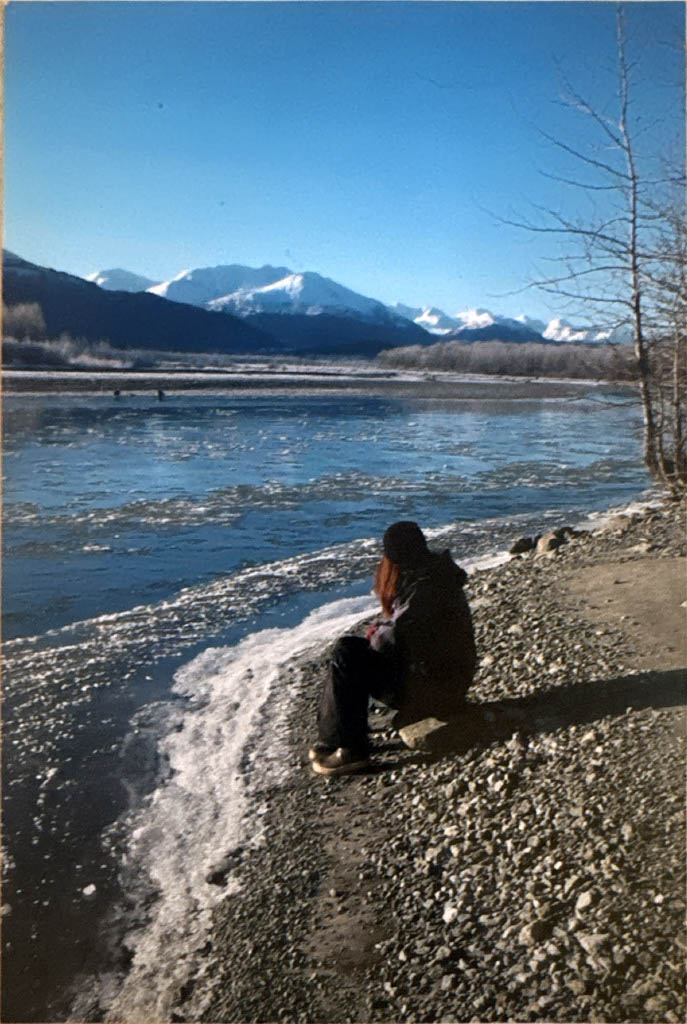
I couldn’t stay in Sitka, though. Turns out, I could not make it anywhere. Indeed, I was ill-equipped for a place where anonymity was impossible. The circumstances that preceded my departure are too sensitive to share in sidebar, so I’ll simply admit that I didn’t know how to stay safe without a crowd. As much as I longed to remain, I couldn’t figure out how to evade a disturbed, possessive person bent on vengeance when the road didn’t connect to others, with water all around. And so before the daylight shortened again, I slipped out and sought shelter with a friend in Seattle.
Wanting for home and purpose, I set myself in motion for the better part of the next 20 years.
New Jersey (again, temporarily). New Hampshire. Iowa.
A bit of cliched backpacking around Europe, with earnest visits to the lands my ancestors had to leave.
Washington, DC. Maryland.
New York (again).
California (for love and family forming).
Arkansas (where we added our second child).
Vermont.
Colorado.
Vermont (again)
Each move was propelled by the same faint hope: perhaps this would be place would claim me? Perhaps this landscape, this community, this rhythm of life would feel like home? I wondered, Is this where I belong? And later, as I started dragging my partner and eventually our children along for this quest: Will this be a place — and community, and a culture — from which my children won’t want to flee?
I tried, in each place, to soak up what made it particular. Local foods and flavors. Weather patterns. The quality of the light, the smell of the air at daybreak. The way dusk landed on my forehead and shoulders; the way it slid down my spine. Regional vernacular and habits of speech. The way seasons shifted, sometimes subtly. The things that mattered most to those who’d never left.
But I also carried the habits of mobility with me. I arrived attentive, yet rarely surrendered to the possibility of staying. My habits of motion slowed but refused to still. They orbited around me, pushing connection past my perimeter. Longing persisted, in part, because I was waiting for a singular experience to recur. I was waiting to be claimed as I had been by the muskeg. Hoping that the Anacostia would embrace me, the Chesapeake would want me, or the Santa Ana winds would sweep me up. Wondering if the Ozarks would “bless my heart” (or stop blessing my heart). Sensing that the Rockies were depriving me of oxygen.
Oh, each place offered me something to learn, many people and other-than-human beings to love, and a few memories that I’d never trade away. And I tried to do a little bit of good wherever I went. But none implored me to stay.
Eventually I moved my family (again) to Vermont, knowing almost immediately that these green hills and silver waters were not my home and did not belong to me. Nevertheless, I absolutely appreciated the almost unmediated aspect of it all. That first fall, I ate apples from every tree I passed, utterly amazed at how obviously this land wanted to nourish me. Vermont seemed like the kind of place who might let me love her even if she wasn’t that into me.
We came to Vermont so I could join the faculty of a small college where every first-year student took a course called A Sense of Place. The Dean of Academics suggested I “assist” with the course – mostly, because she could tell that I needed the orientation as much as the freshmen and transfers did. For many of these young adults — and for me — it was the first time that a teacher asked them to attend to the landscape around them: its ecology, its history, its watersheds, and working lands. Watching students encounter place-based learning — sometimes skeptically, sometimes with delight — made something click for me.
Place, I realized, was our first teacher. And teachers rarely expect or require that we stay with them indefinitely. But they do deserve our care and respect while we are together — and our gratitude long after.
Not long after, I (like so many relationally inclined people), was awed by Robin Wall Kimmerer’s Braiding Sweetgrass — a book that tuned my awareness and enhanced my capacities much in the way the muskeg did. In particular, I read and re-read the chapter entitled, In the Footsteps of Nanabozho: Becoming Indigenous to Place. Perhaps I was drawn to it because its opening lines situate Robin at the western edge of Turtle Island, observing: “I’m new here too… new to how land appears and disappears in this place with the tides and with the fog. No one knows my name here, and I don’t know theirs… I feel like I could disappear in the fog along with everything else.” That familiar feeling — the particular way one might fade into the fog at Sea Lion Cove and slip out with the tide — filled my first weeks in Southeast Alaska. Moreover, I’d experienced variants of it in the smog of Los Angeles and when face-to-face with the Flatirons.
But there was a difference between Robin and me as travelers. Robin knew how to introduce herself and to whom:
I too was a stranger at first in this dark dripping forest perched at the edge of the sea, but I sought out an elder, my Sitka Spruce grandmother with a lap wide enough for many grandchildren. I introduced myself, told her my name and why I had come. I offered her tobacco from my pouch and asked if I might visit in her community for a time. She asked me to sit down, and there was a place right between her roots. Her canopy towers above the forest and her swaying foliage is constantly murmuring to her neighbors. I know she’ll eventually pass the word and my name on the wind.
While Robin was making offerings of both her name and sacred plants, I was – at least for a long stretch of years in my late 20s and early 30s – hoping I’d fall into place again.
Much of the rest of that chapter relays the stories of Nanabozho, First Man, who also personifies life forces in Anishinaabe culture. Kimmerer characterizes this mythic indigenous figure, at once historical and still-prophesied in the circular turns of time, as an immigrant, softening the edges of classifications that sometimes seem to spotlight separation even within cultures and ontologies of entanglement.
Nanabozho did not know his parentage or his origins — only that he was set down into a fully peopled world of plants and animals, winds, and water. He was an immigrant too. Before he arrived, the world was all here, in balance and harmony, each one fulfilling their purpose in the Creation. He understood, as some did not, that this was not the “New World,” but one that was ancient before he came.
The ground where I sit with Sitka Grandmother is deep with needles, soft with centuries of humus; the trees are so old that my lifetime compared to theirs is just a birdsong long. I suspect that Nanabozho walked like I do, in awe, looking up into the trees so often I stumble.
Awe, it seems, was essential for supporting Nanabozho’s ability to interpret Original Instructions. And stumbling awe may be a necessary element for Second Man, as we try to live on Turtle Island as though we mean to stay. Indeed, Kimmerer wonders: “[C]an Americans, as a nation of immigrants, learn to live here as if we were staying? With both feet on the shore?” In considering this question (and others that it raises), she follows Nanabozho’s journey in each of the four directions and the lessons he learns from each. After this, she has surfaced many sources of wisdom, but she’s still struggling for clarity about whether settlers and immigrants can form ethical relationships with the land without claiming Indigenous identity. She concludes, sensibly, that people after Nanabozho cannot “become Indigenous” because Indigeneity is a birthright rooted in long ancestral relationship with place. Nevertheless, she presses on with exploring how people might still learn forms of reciprocity that sustain the land and its communities.
To make sense of this, she turns to a plant known as “White Man’s Footstep,” common Plantain (Plantago major), non-native to Turtle Island, brought here by and spread with the movement of European settlers. Though it arrived with colonization, Indigenous communities came to recognize Plantain’s gifts as food and medicine. Unlike so-called invasive species (e.g., Kudzu) that dominate ecosystems, plantain coexists with native species and offers healing. Over time, it became a “naturalized” species — one that originates elsewhere but lives in balance within its new home.
Kimmerer suggests this as a model for settlers: “not to claim belonging through ancestry, but to live in ways that contribute, respect limits, and care for the land that sustains them.”
“Maybe the task assigned to Second Man is to unlearn the model of kudzu and follow the teachings of White Man’s Footstep, to strive to become naturalized to place, to throw off the mind-set of the immigrant.
Being naturalized to place means to live as if this is the land that feeds you, as if these are the streams from which you drink, that build your body and fill your spirit. To become naturalized is to know that your ancestors lie in this ground. Here you will give your gifts and meet your responsibilities. To become naturalized is to live as if your children’s future matters, to take care of the land as if our lives and the lives of all our relatives depend on it. Because they do.”
This passage put words to so much of what I was already trying to do. For a while, I carried that phrase with me as both instruction and aspiration: to become naturalized to place. It named something vital and reinforced a longing I wasn’t raised to reach for. And so I started reaching, trying to naturalize to place, while also trying to help others perceive humans as a part of (not apart from) the rest of nature. Indeed, as I aligned my professional work with the aspiration of becoming naturalized to place, I was better able to understand why so much well-intentioned and initially inspiring work in agriculture and food systems ends up reinstantiating the harmful features and patterns of industrial, agricapitalism – the very system it aims to change. Not surprisingly, the concept of becoming naturalized to place appears throughout Feeding Each Other (my book on shaping change in food systems through relationship, written with my friend Michelle Auerbach). In that context, we followed the quote directly above with our own observation that “[t]he naturalization process doesn’t end with a connection between self and place, though. It also requires knowing that the land, not just your person, bridges your ancestors and your children, and that the same ground matters to your children’s futures.”
“Something about the framework of naturalization felt misaligned with the kind of relationship I was trying to imagine. Land does not issue passports. Watersheds do not administer citizenship tests. The winds do not round up particular migrants and forcibly remove them — and only them — from delimited places. Fires do not burn behind the cover of “naturalization” laws and seek to ethnically cleanse particular forests.”
Yet, in recent years – alongside shifts in political discourse and border enforcement (shifts that really become noticeable and increasingly violent well after the first publication of Braiding Sweetgrass), the naturalization metaphor began to trouble me. Perhaps it is my training as a lawyer that made me sense the sharp, separating edge of the term. Naturalization is, after all, a term that originates and persists in immigration law. It was a legal concept for decades before being incorporated into biology.
The concept of naturalization in biology, which denotes introduced species as self-sustaining populations in novel environments, came to terminological specificity in botanical literature during the mid-19th century. However, it was used legally much earlier in the United States Naturalization Act of 1790. In the legal context, the process and status of “naturalization” were limited to “free white persons” with at least two years’ residency in the United States. Shortly thereafter, in response to political instability and fears of foreign influence, naturalization requirements were amended to be even stricter, requiring five years of continuous residence and a three-year declaration of intent. And still today, in the US and in many other nation-states around the world, naturalization requires evidence of assimilation (e.g., continuous residence for a period of at least 5 years).
To forge or force a singular link between the migrant person and their new state, legal naturalization also typically requires renunciation of prior allegiance. While such requirements have some legitimate basis in supporting social cohesion and mutual obligation, they are also premised upon the notion that the very fact of human being can be rendered illegal on one side or another of relatively arbitrary lines that humans sketch into the land. These requirements can sever relationships, cut people off from their lineages and languages, and narrow our belonging. They aim to impose allegiance to a somewhat fictive or synthetic state and displace the allegiance we once had to the land, spirit, and culture.
Something about the framework of naturalization felt misaligned with the kind of relationship I was trying to imagine. Land does not issue passports. Watersheds do not administer citizenship tests. The winds do not round up particular migrants and forcibly remove them — and only them — from delimited places. Fires do not burn behind the cover of “naturalization” laws and seek to ethnically cleanse particular forests.
As life-honoring people all across the US, a nation-state still largely ruled by Second Men, actively resist rising xenophobia, criminalization, and terrorization of immigrants, retributive “denaturalization,” and a host of other (il)legal abuses of power, the phrase “being naturalized to place” has started to feel unduly fraught. And as we anticipate ever larger waves of migration in response to climate volatility, catastrophe, and the related rapid relocation of lines between land and water, it started to seem like a term with less legal baggage was needed.
And so, within the otherWise community, we began looking for a different language to carry this concept. Something that migrants, settlers, and even displaced indigenous folks might all aspire to together. The word that emerged to carry the concept is placedness. We offer it to describe an orientation, posture, or practice. It is not intended to be used as a claim or identity label.
Placedness
A relational orientation to land and life that invites presence without possession, return without claim, and a kind of attending that does not require rooting. Placedness does not require permanence. It invites us to let both beauty and horror shape us, to follow the rootline of longing, to arrive and attend, but not to adhere.
Placedness holds space for diasporic and nomadic relationship to land — where people do not come from uninterrupted belonging, but long to participate in reciprocity with place, as nested within cosmos. The notion and practices of placedness might offer a way for those shaped by modernity and severance to re-enter relationship with land — not as a replacement for Indigenous belonging, but as a humble companion to it. It honors both ancestral capacity and present longing while recognizing that some humans have been displaced and steeped in supremacy for so long that the channel for connection is congested or occluded and existentially essential capacities have been exiled. It is not a claim of indigeneity, but a practice of listening, consenting, sometimes resisting, and remembering how to be accountable in place and context.
Lineage
Conjured within the otherWise community, as an alternative to “place-based,” “naturalized to place,” and other phrases that imply ownership, stasis, or settler-termed belonging. Placedness emerged as an attempt to name relationship to land for those shaped by modernity, displacement, and diaspora, without performing indigeneity or erasing its foundational importance. It carries some of and builds upon what Robin Wall Kimmerer calls for when she invites settlers to try becoming “naturalized to place,” though intentionally without invoking the language of immigration law and tacitly reinforcing the legitimacy of nation-state borders.
Quickening
“I’m not from here. But I planted fruit trees anyway. I left berries for others when I foraged. I slept on the edge of the forest. I tried to be here now, without pretending to belong here first or forever. That was how I practiced placedness.”
“The only kind of placedness I can embody is diasporic placedness infused, at best, with the intent to be-long via submission to reality.”
Countering
Ownership, Settler-colonial place-based education, Rootedness as purity test, Naturalization as statist metaphor, The romanticization of indigeneity, The erasure of diaspora, The expectation of or entitlement to coherence.
Relations
Diaspora, Edge-dwelling, Rootlines, Chthonic memory, Seasonal return, Relational tethering, Nestedness, Bioregionalism, Cosmolocalism, Sacred wandering, Stewardship without possession
Inquiries
- How might we relate to land without claiming or owning it?
- Can we be placed without being permanent?
- What does it mean to arrive and attend, but not adhere?
- What non-rooted behaviors of belonging might we learn from other migratory species?
- How do we honor Indigenous presence while practicing place-connected reciprocity? Can we do this in ways that avoid wielding identity categories that are legible and useful to empire as wedges?
- What does it mean to be long here without pretending to have always belonged here?
Placedness might be a pre-cursor to be-longing — but it doesn’t make such guarantees.
It might involve paying attention to the ways water moves across and through a landscape. It might entail rebuilding the soil sponge. It might look like learning names – official, charismatically expressed, or affectionately assigned – of the plants along a walking path. Noticing the timing of first frost. Learning the history of a place, her peoples, her wounds, and her wonders.
It might mean contributing to community life, where you are sharing skills, tending gardens, showing up for neighbors, modeling this orientation, even if you know or anticipate that you may one day leave.
Placedness also asks for honesty and integrity, which together often involve the capacity to ponder and move with paradox. Some of us carry diasporic histories of exile and assimilation. Others carry inheritances tied to colonial expansion. Many of us carry both at once. Placedness does not resolve or remove those tensions. It simply invites us to inhabit them with awareness and empathy.
Placedness encourages us to arrive, even if we’ve been somewhere for years or even generations, and attend, without pretending we have always belonged.
Attempting to Come Home Again
In 2021, my family felt called back to Vermont. The call ostensibly came in the form of a job offer (again) — an offer to return to that same small college. But really, it came through our children, who had begun bristling against the facade of suburban life on Colorado’s Front Range and expressing their longing to live in the woods and meadows again. We returned with the awareness that this place was not ours in any historical sense. We even carried the notion of return cautiously, conscious that local custom does not hand out the title of “Vermonter” lightly. Many descendants of early Vermont settlers say that even being born here is insufficient – to be a Vermonter, they assert, requires having “three in the ground” generations buried here. Others offer that it isn’t about generational presence alone, but a mix of durational presence, ways of relating to this place, and of being neighbors. It’s a stand-in for pride in Vermont’s particular type of rural, North Woods, harsh climate identity. And growing numbers acknowledge that these are settler constructs that further invisibilize this land’s first people, the Abenaki.
Five years and many trees planted later, I am still not sure whether this will be a forever home, but I am trying to act as though it could be. And this behavior gets easier with every drink of water I pull up from beneath the ground, every seed I set to root in, every leaf I harvest, and every morsel I eat. This place is part of me. More and more, with every act of co-tending.
Still, something significant has shifted. I am no longer looking for a place to claim me. The muskeg did that long ago. She did it not for herself, but for her specific ecological exegesis. She did it so that I could sense myself as part of the land. Sitka taught me how land and water can take hold of a person. They grab hold without requiring ownership, ancestry, or even sustained presence. They awaken sensibilities, capacities long slumbered. They attach through attention. Once that happens, every landscape becomes legible in new ways – if you gaze with awe and reverence.
“Placedness, I am discovering, is less about finding the right place than about learning how to be-long wherever you are, for as long as you can be there, so that life can continue to be long there. It asks for attention, intention, agency and devotion. For repair and reciprocity. It asks us to remain both permeable and protective. Rooted and moving. Still enough to saturate.”
What matters to me less now are claims of belonging. What matters more are the practices that make more life more possible for more beings.
And, over the years, the moves, and the offering of my attention to places, people, cultures, rituals, and stories — to things rarely available for purchase in restaurants, nail salons, and shopping malls of my youth — I honed a skill I didn’t even know I needed when I landed in Sitka, during the early autumn of 2002. With time and practice, I have learned how to arrive. How to introduce myself. To make offerings. To seek permission. And how to attune to the subtle signals that come back in languages other than your own.
Placedness, I am discovering, is less about finding the right place than about learning how to be-long wherever you are, for as long as you can be there, so that life can continue to be long there. It asks for attention, intention, agency and devotion. For repair and reciprocity. It asks us to remain both permeable and protective. Rooted and moving. Still enough to saturate.