
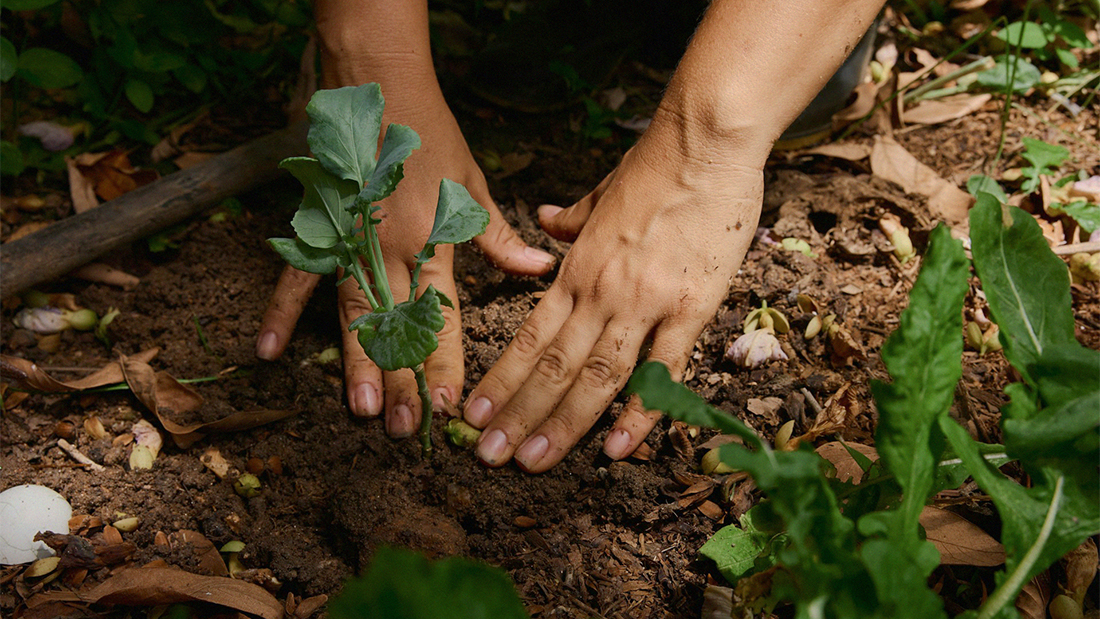
reVillaging, as we have now seen and will continue to explore, is more material than ideological, more need-based than vision-driven, more grounded than ethereal or conceptual. While reVillaging irreducibly includes the interpersonal, aesthetic, spiritual, and metaphorical, it typically begins as a material praxis.
This is part II of a 4-part essay on reVillaging. Read part I here.
Contributor bio
Founding Weaver of otherWise, Nicole is a complexity thinker, relation-shifter, and paradigm midwife committed to cultivating nourishment, enoughness, and mutual learning. She tends the rhythms and realities of otherWise with grounded discernment and deep devotion.
But not all materialism is metabolically sound. When material needs are met without awareness of and reverence for land, the whole effort easily falls into abstraction, extraction, and transaction. (Land, as used here, embraces all elements – land, water, fire, air, and spirit)
reVillaging asks us not to return to the land, but to return through it.
To let the land reshape our rhythms. To learn again how to be of place.
To situate our own distinct essence among countless communicative expressions of life on earth
To notice how we participate in a much larger swirl.
Since the enclosures and successive waves of dispossession, land has been regarded by those within colonizing and industrializing cultures as a surface to be claimed, divided, optimized, plundered or preserved. This largely ahistorical way of perceiving and relating to land has been enormously consequential.
Even in well-meaning efforts toward sustainability or regeneration, land often remains a backdrop – a setting for human activity or a passive recipient of conservation. ReVillaging requires a different understanding.
Initially, reVillaging invites us to enter into reciprocal relation with land as site and source, shaper and sage:
- the site of our attempts to reweave,
- the source from which those patterns emerge
- the shaper of patterns that can sustain and be sustained
As site, land provides the material conditions that shape what is possible. The slope of a hill determines how water flows. The location of old trees suggests where shade might fall or gather. The presence of clay, loam, rock, or ash teaches us what might be built, and what must be let be. The needs of other-than-human beings who collaborate to keep life cycling in that place mark out the enabling limits of what actions and interventions are wise and can be sustained.
As source, land is not just where we live – it is how we (learn to) stay alive. The soil instructs when it is ready for planting, when it needs rest, when it refuses to yield. The wind signals when to patch the roof. The seasonal arc of growth and decay reshapes our sense of time. These are not metaphors. They are real relationships. Learning happens through contact: the smell of the manure, the sound of bees, the ache in the shoulders after digging a swale. To learn the land is to let go of control. To let the village be co-scripted by ridge-line, rain, and root.
It would be convenient if we could write up a universal design or framework for a Village – a model that could be shared and copied with a few adjustments around the edges. But the Village, even in its seeming simplicity, is too complex, too dynamic for all that. A reVillaged place simply cannot be replicated because living systems wisely refuse standardization. No model can convey that which is presently unseeable or unsayable. No blueprint can describe the swirl between soil, sun, water, and will.
“ReVillaging, then, involves reading the landscape, receiving messages from the materia, beings, and spirits of place, and responding to them.”
So many contemporary humans were raised (raised) in pursuit of ascension, encouraged to believe we were powered by superiority and cleverness. Praise was piled upon mastery, upon the refinement of an already assumed exceptionalism. But that story never fully satisfied. We still wondered: what is the meaning of life? The obvious answer – life is meaning – couldn’t be squared with with superior, singular selfhood. Accepting this isn’t the result of reason or proof. As members of a millions-of‑years‑old species enlivened by the green pulse and as self‑described enlightened creatures of the carbon pulse, this truth can feel obvious and awkward at the same time. As people conditioned to either ignore, engineer over, or dominate land, we must reorient and offer ourselves.
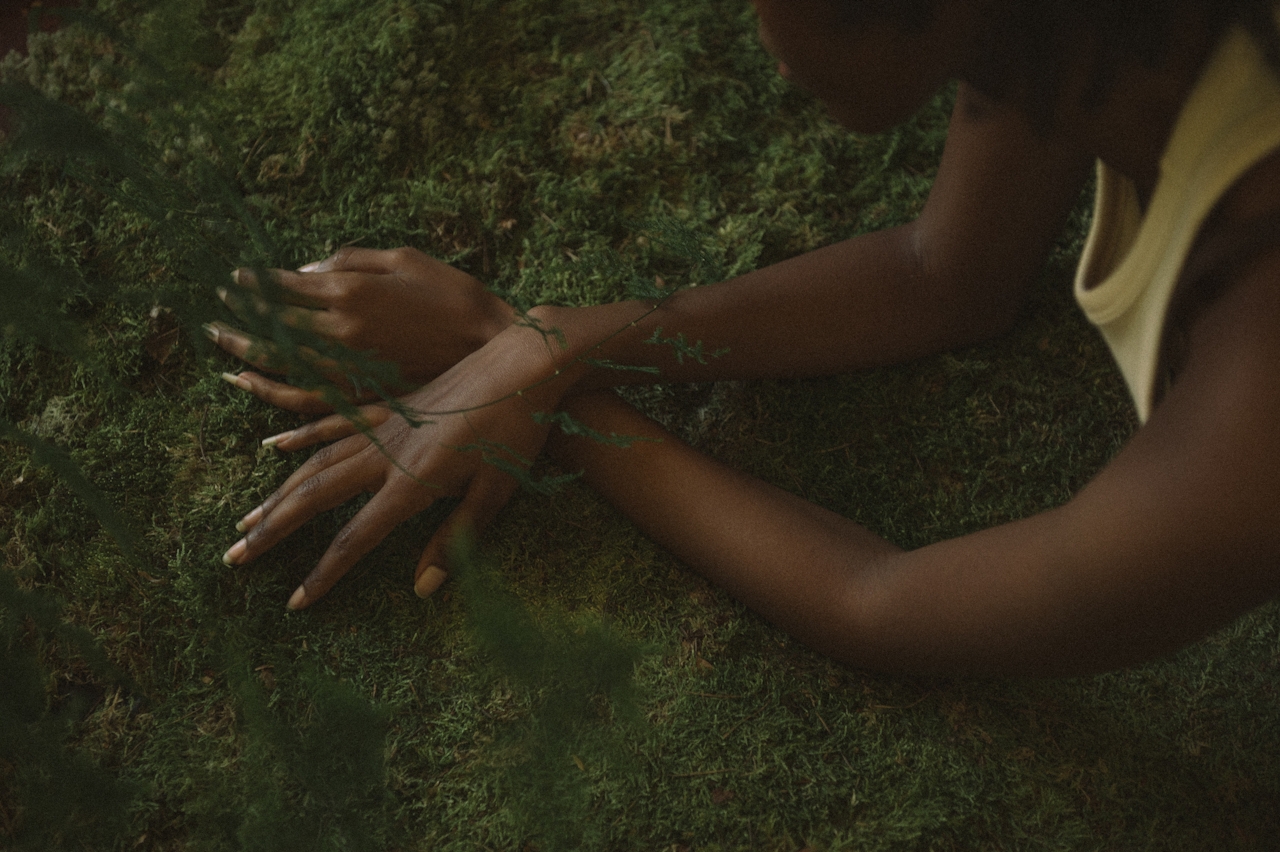
“The kind of attention the land calls forth can slow us down, cool our cravings. Sitting in the same place day after day, noticing how light shifts and wind moves, how certain birds return, or how the ground rots and reforms can quiet the urge to identify and classify. This invites an intimate knowing of a deep truth: that we are land – one expression among many within ecologies of expression.”
reVillaging positions us to be shaped by land – to let that shaping to inform the way we apply our incredible human abilities. Such shaping, a form of learning with and within, can only happen when we slow down, notice, and dwell. It happens through wordless dialogue and honorable work. Through acceptance of dependence. Through devotion. Through wonder and praise. The kind of learning that is needed will be the work of several lifetimes. To even attempt it after so many centuries of severance requires humility, attention, and time. If we offer all of that, we notice how land gestures and flows. It greens and goes dormant. It warms toward decay. It arises and returns in cycles that move at rhythms no single kind of intelligence can fully perceive at once – except, perhaps, the widest and wildest wisdom of land itself.
The kind of attention the land calls forth can slow us down, cool our cravings. Sitting in the same place day after day, noticing how light shifts and wind moves, how certain birds return, or how the ground rots and reforms can quiet the urge to identify and classify. This invites an intimate knowing of a deep truth: that we are land – one expression among many within ecologies of expression. Our aliveness involves action from within the communion of life. We must harvest – to cook, to clothe, to build – but honorably, attentively, with familiarity. With as few degrees of separation as we can manage.
Degrees of separation is such a revealing phrase. Such degrees are the gaps through which relationship thins into abstraction – where the labor that nourishes us disappears, the sources of our materials are obscured, and waste is whisked away. But our senses were shaped for nearness: for the sound of breath, the resistance of soil, the texture of bark. Land teaches when we are close enough to sense and respond.
We need not make the land speak. We need only recover our capacities to hear – and to answer, such as by:
- cultivating long‑term, layered relationships with particular places;
- letting seasons guide how and when we gather, and what we do;
- seeking skills through dignified apprenticeship; always inhabiting the role of teacher and learner;
- trusting observation and intuition to accompany technique – to guide our interventions
- offering ceremony in ordinary moments;
- noticing fractal patterns and quiet amplifications; and
- using story and reflection to help us sense, hold, and return.
We know this is possible because our ancestors knew it. They lived as the land – not notionally, vitally. Their offerings to rivers, songs to stones and seeds, movements beneath moonlight attuned participation and nourished relations.
When approached as site, source, and shaper, land stops being the stage for a dream – and becomes a co‑composer of dreams herself. Some say that this reverent approach lets land dream through us. (This notion of dreaming Earth is a modern poetic articulation that echoes many Indigenous, animist, and Gaian understandings of land as living, agentic, and enspirited.) While it might be tempting to read these words as metaphor, to do so would be to repeat a very modern mistake. One that considers only human agency and intelligence, without appreciating the array of intelligences that interact and infuse. If instead, we regard ourselves as temporarily animate assemblages – distinct and dependent, coherent and composed of other beings – something softens. Reverence for life, awe at its one‑and‑otherness, and attentiveness to its expressions begin to follow. Dispositions, not just beliefs, form next.
As land sings us into right relationship, what sustains that relationship? What daily practices, rhythms, and skills make be-longing possible? In Part 3, we explore the work of reSkilling and the way that such efforts shape the ethics and energetics of village life.