reVillaging calls for a slow, simmering restoration of cultural thickness – the kind that melds bits of memory and meaning into shared offerings and observances. For those with relatively intact lineages, this might look like continuing or reviving ancestral practices, and perhaps sharing them selectively in circles of solidarity. But it might also mean rendering new rituals out of shared struggle, mutual noticing, and honest desire.
This is part III of a 4-part essay on reVillaging. Read part II here.
Contributor bio
Founding Weaver of otherWise, Nicole is a complexity thinker, relation-shifter, and paradigm midwife committed to cultivating nourishment, enoughness, and mutual learning. She tends the rhythms and realities of otherWise with grounded discernment and deep devotion.
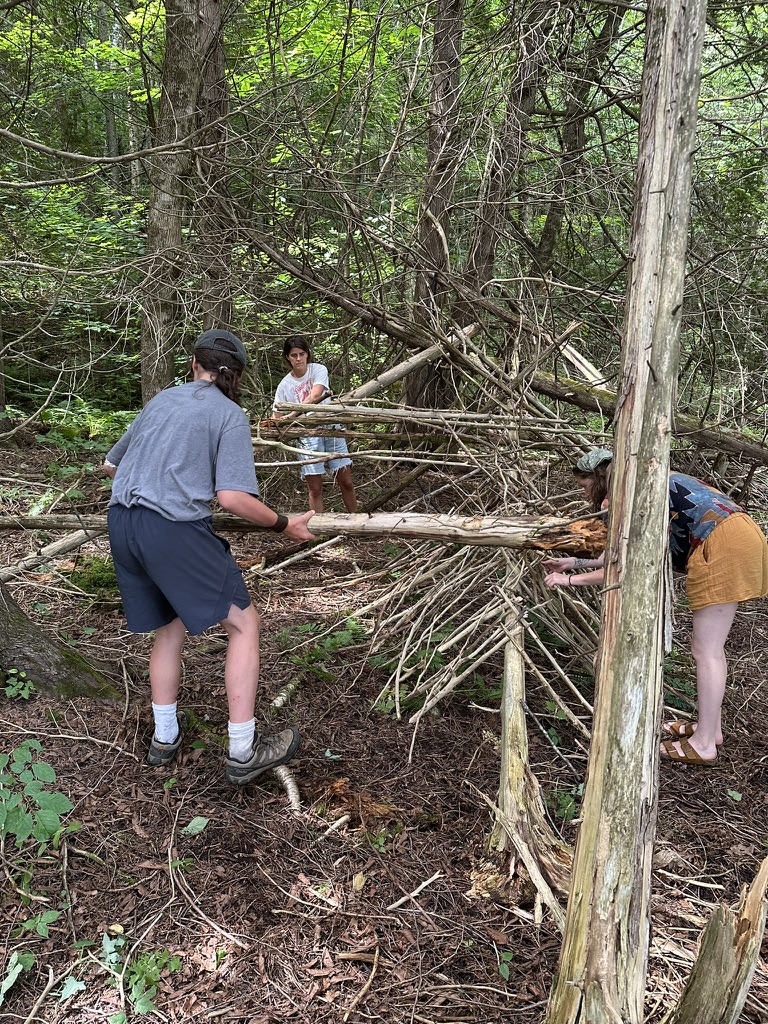
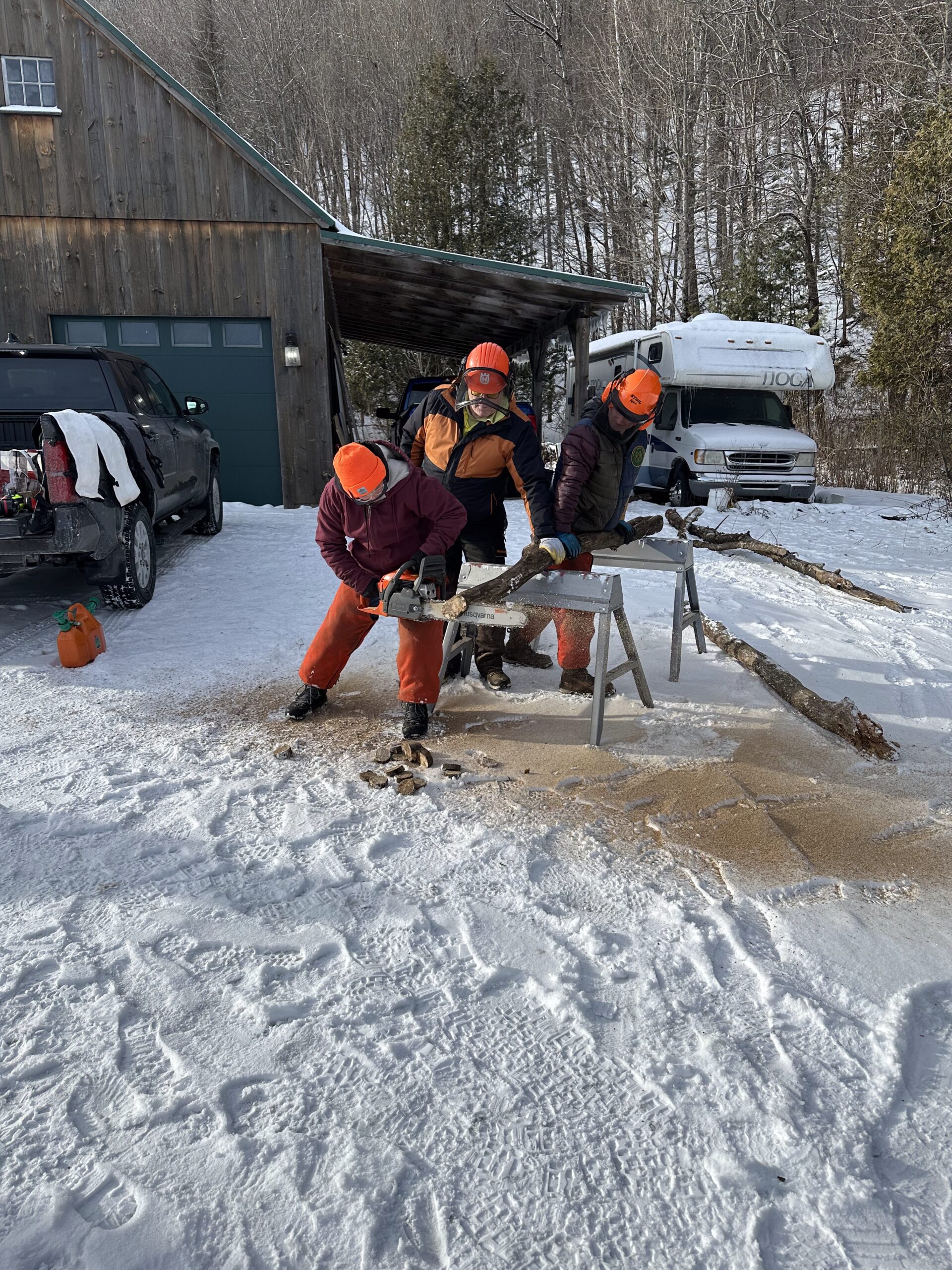
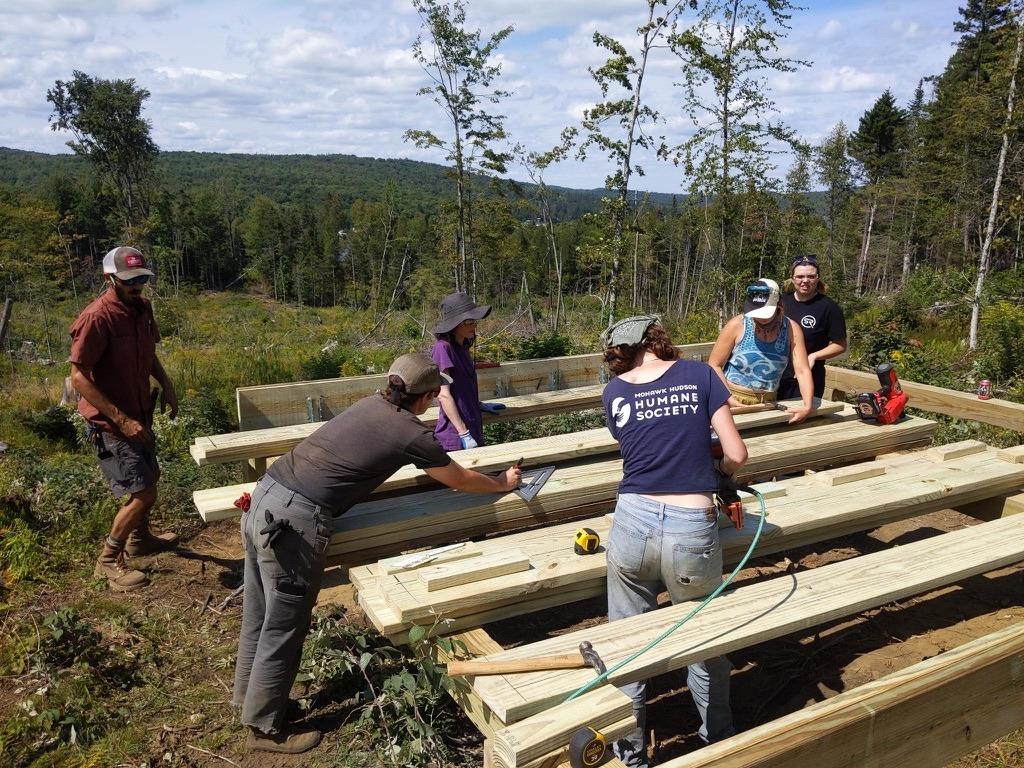
To live well together, especially in collapse-prone conditions, we need to become metabolically literate and materially competent. We must recover, develop, and distribute practical, providential skills: those that allow us to meet real needs in situated, reciprocal, and rhythmically appropriate ways. The skills that nourish a village are small, shared, and presently undervalued: identifying plants and saving seeds, tuning a saw and harvesting a tree, weaving and tying an infant wrap, rotating livestock and making cheese, watching the weather, determining when to intervene and when to wait. When braided together with care, they become the infrastructure of interdependence.
To speak of providence is to tread on heavy soil. In dominant Western traditions, the word often evokes Divine Providence – a paternal god guiding history from above, ensuring that all things work together for greater good, no matter the suffering involved. This framing can foster passivity, even complicity: a belief that all outcomes, however violent or extractive, are part of a larger ordained plan.
This, however, is not the only way to understand providence. The older root of the word – pro-videre, to see ahead – invites us to live with foresight, care, and intention. In this sense, reviving providential is not about ordaining or controlling outcomes, but about remaining alert to shifting conditions, to actions and their cascading consequences. It’s about being attuned, observant, and responsive in one’s place and within a web of relations – not about claiming omniscience. A provident village does not wait for rescue; it roots in deeper as the winds of change gust harder, circulates its stores, multiplies its capacities, and senses what the land is signaling.
Thus, the work of reVillaging is, in some ways, an effort to reclaim providence as a relational and practical ethic, not a divine decree. To loosen it from its theological shackles and cast it back it into a culture of earthly responsibility, individual humility, spiritual sonder, and mutual care. To be provident is to look ahead with care – to tend the future in the present – with critique of, but not disdain for or paralytic shame about, the past. To be provident now, as part of a deeply wounded but still so precious and powerful planet, continues to be about learning to live gratefully with what is here. To know which plants nourish, repair, and poison, and in what doses. To grow sturdy hands and receptive hearts. To apprentice ourselves to place and one another.
Through our work with Don Blair of the Waterbear Field School, we’ve developed a Skill Wheel that maps core domains of re-villaging. Each slice corresponds to a life-sustaining practice: water, shelter, food, energy, tools, health, and more. The wheel turns when each spoke helps hold the shape. Thus, it is important that each is attended to within a village.
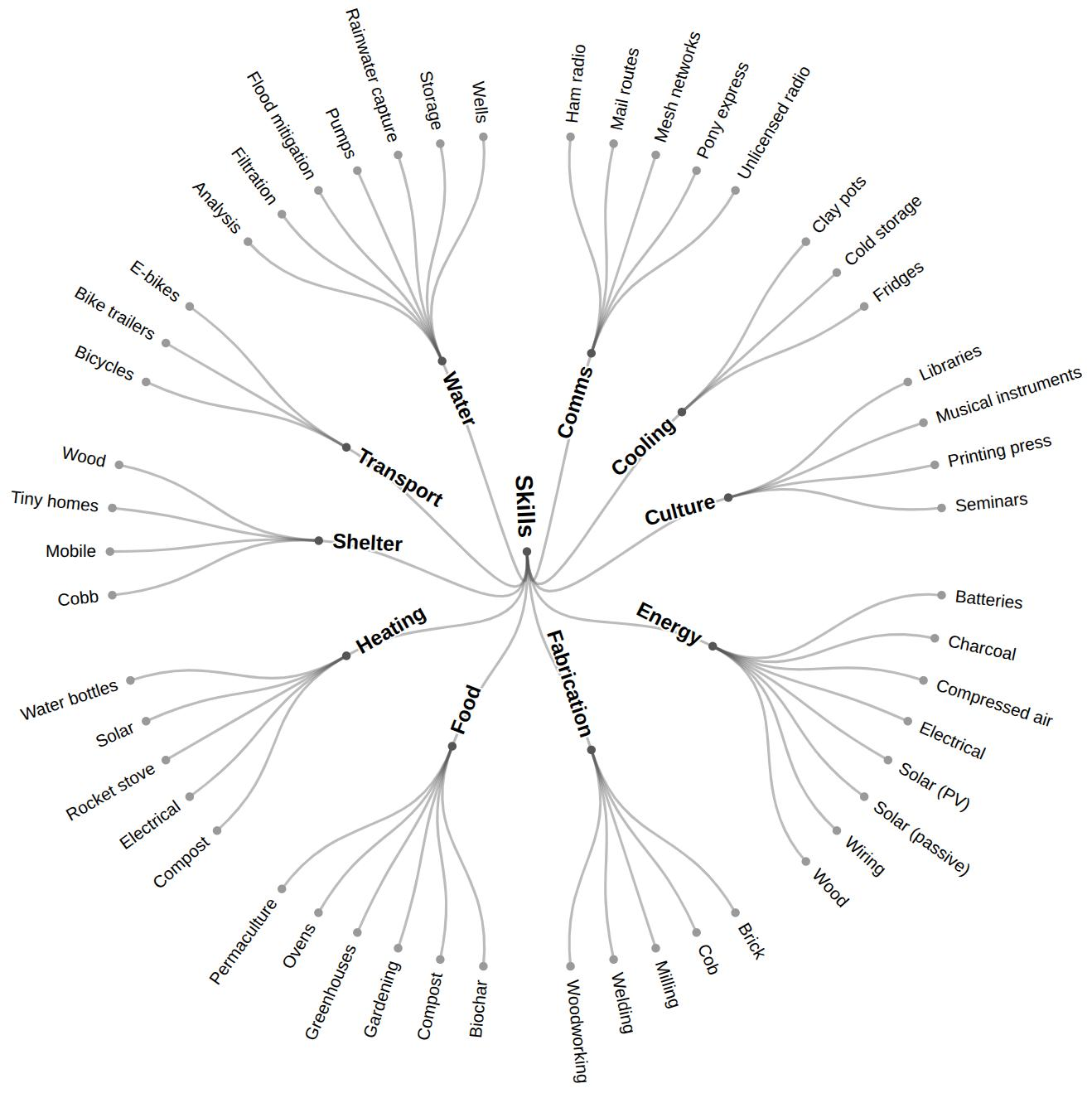
In parallel, otherWise advisor and community member Greg Nelson is in the process of developing a reSkilling Taxonomy that identifies and organizes the nuts‑and‑bolts skills commonly needed in a low-tech village. The taxonomy is organized into layers: what most people can do, what some people specialize in, and what a few carry between places when needed. It can be used to inventory real capacities in a community – who can cook for a crowd, fix a pump, butcher an animal, teach first aid – grouped by basic, advanced, and mobile skill levels so nothing essential depends on just one person. Or it can serve as a framework for organizing knowledge or creating a syllabus for an informal School of reSkilling.
Elegant Redundancy
Modernity encourages us to optimize, specialize, and eliminate inefficiencies. These orientations are thought to create robustness and success. Villages require and behave otherwise. They cultivate elegant redundancy – an intentional overlap of capacities – so that life can continue when illness, migration, conflict, or change disrupts (or even snaps) a single thread in the web. Thus, as we consider the skills that are needed, we invite communities to think about them in layers:
– (Near) Universal skills that most people (with the associated abilities) ought to hold.
– Common skills that ought to be shared among several people within a community.
– Specialist skills that just a few carry, with tools and knowledge distributed just enough to guard against fragility. Specialist skills might be held by roving experts. If a type or level of a skill is not needed in every village all the time, such skills can be treated as expertise that may be developed by and limited to those willing, able and supported to travel and collaborate regionally.
reSkilling – and these tools to help us inventory and supplement the skills in our communities – invites us to re-member something that modernity dismembered: individual accomplishments mean more when they support collective capacity and integrated improvisation. No one knows how to do it all. (And no such expectation is allowed to last long.) But together, we can hold enough. A re-villaged people are a skilled people because they have chosen to become response-able together.
Ethics and Energetics of the Village
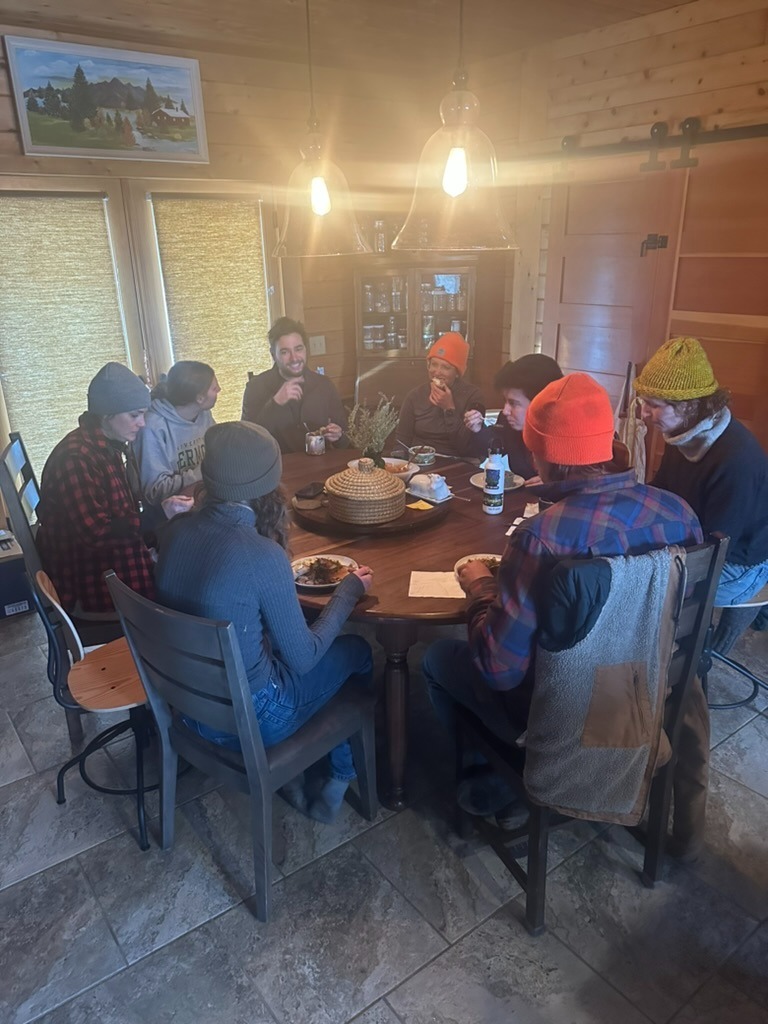
Villages are made of people, dwellings, and doings – a combination that generates a kind of energy that seems to have the power to create culture and ethics. Patterns that propel. These ethics do not descend as doctrines from above; they are not the exclusive province of philosophers, lawyers, judges, or experts. They emerge as pulses from below and within, from the felt experiences of effort and care, and from the cycles of life, death, decay and rearranged becoming. The rhythms of a reVillaged life are ethical not because they conform to doctrine, but because they restore a coherence between what matters and how we move.
Where modern moral codes often separate belief from behavior, ethics from economy, village ethics are inseparable from the processes of life-making-life-making-life. They lose a little something when put on paper. But they really seem to make sense when we’re in the thing together, pacing our labor to match both the light and our bodily limits, concerned for the good of the whole. The rhythms of a reVillaged life are ethical because they restore a coherence between what matters and how we move. The values are vows expressed and renewed daily through presence and participation. And they thrum in the intergenerational tension between remembering and remaking – between respect for time-tested ways and contextually responsive adaptation. While some concepts might need to be clarified and a few even represented in words or symbols, the aim of restoring alignment between what matters and how we move ought to obviate the need for constant codification. Relational rigor and cultural commitments might be what we need to get out from under regulatory ridiculousness and bureaucratic banality.
In the era of endings, many institutions that once shaped and expressed various kinds of collective ethics (e.g., schools, churches, governments, professions) have crumbled or calcified. And without those institutions scaffolding social order, competing ideologies, identity performances, and desperate bids for certainty vie for our allegiance. But reVillagers sense that there is neither rescue nor relief to be had through righteous alignment or ideological purity. They are more interested in what animates than what is asserted.
By doing less overall – and more of what matters – labor becomes enlivening. Not always romantic, not always a source of joy – but real, rhythmic, and undeniably worthwhile. We learn again to cook with what is at hand, to fix what can be mended, to rest when the light wanes. Yes, even in a village that requires direct and coordinated labor on schedules other than our own, our work ethics must be paired with rest ethics.
These ethics, like the ecosystems within which they circulate, are also plural. A reVillaged place, let alone world, will not be one of perfect agreement or shared ideology. At present, it seems that so much of our attention gets siphoned into symbolic battles, which means that there is far less of it to devote to shared life. One way to counter this is to engage not from ideology, but inquiry, by being in query. Indeed, this is a good bit of what we at otherWise mean when we say we are living the questions that protect what is still possible. The work of reVillaging allows us to live the questions, not just pose or discuss them.
And while we must hone our capacity to cooperate without requiring sameness, we have to avoid slipping into some kind of naïve pluralism. There are postures, quite popular ones, of authoritarian domination, supremacist or eugenicist control, or conspiratorially justified violence that are simply incompatible with reverence, with life-making. They mimic the village but aim to wield power over it, not to share power within it. Thus, in discerning who to reVillage with, we must learn to distinguish those disoriented by collapse from those comfortable harming others to gain the upper hand. We must leave a little space for people to see the fallacy of their favored supremacies and cut them way back, but if those supremacies aren’t composted before they set seed, the whole pile is likely to sprout another generation of the same bad ideas.
Cultural Texture & Ritual
When modernity tried to split the world into spirit and substance – and again when it cleaved the self into mind and body – neither the land nor the villagers were capable of complete compliance. A living place, just like a living being, is both body and prayer, matter and mystery. In digging and protecting a spring, in making or sharpening a blade, gathering or steeping herbs, we can also be tending ruptured cosmologies. And in some places, ancestral memories still carry ways of weaving the sacred and the everyday, even through imposed monotheism or colonizing creeds.
More than the sum of shared labor and ecological intimacy, village life is textured with patterns, sounds, gestures, and meanings that arise from lived particularity and that help us feel who we are together. The songs we hum while digging, the garments we wear into town, the way we greet each other at dawn, the foods we ferment, the griefs we name aloud, the stories we return to each winter. These make us recognizably connected to each other – and perhaps cherished – in ways that can’t be easily weaponized on a grand scale.
This kind of culture is more concerned with collective continuance than consensus. Citizen Potawatomi scholar Kyle Powys White defines collective continuance as a “society’s overall adaptive capacity to maintain its members’ cultural integrity, health, economic vitality, and political order into the future and avoid having its members experience preventable harms.” Societies – or even villages – that prioritize collective continuance are “organized in ways that are suitable for adjusting to potential changes, learning from the past, and mobilizing members… to tackle hard problems.” For White, collective capacities are generated through relationships of responsibility and reciprocity when qualities like trustworthiness and redundancy are present.
And yet, in modern life, we’ve lost these qualities along with much of the through-line that allows us to learn from the past and connect it through the volatile present to our hopes for the future. We snag rituals from traditions we barely know. We consume our way through holidays drained of meaning and decorated in consumption. In our most secular spaces, we feel embarrassed when someone dares to speak about sacred conditions or wonders about the mysteries of aliveness. And when we are made dull by an entirely obvious existence, we seek diversion (and even meaning) in that which has been made consumable for markets, curated for social media, or pitched to keep power where it’s already been hoarded.

“Ritual is called for because our soul communicates things to us that the body translates as need, or want, or absence. So we enter into ritual in order to respond to the call of the soul.”
– Malidoma Somé
reVillaging calls for a slow, simmering restoration of cultural thickness – the kind that melds bits of memory and meaning into shared offerings and observances. For those with relatively intact lineages, this might look like continuing or reviving ancestral practices, and perhaps sharing them selectively in circles of solidarity. But it might also mean rendering new rituals out of shared struggle, mutual noticing, and honest desire.
Ritual here need not be pageant or spectacle. Indeed, it should not be. Malidoma Somé counsels that, “Ritual is called for because our soul communicates things to us that the body translates as need, or want, or absence. So we enter into ritual in order to respond to the call of the soul.” Ritual may be how we make sense of what we cannot control. It is how we signal to one another that something matters – a birth, a storm, a harvest, a departure. Rituals can remind us we belong not just to each other, but to something larger: a place, a story, a planet, a cosmos. They can begin simply as repetition imbued with attention.
In a reVillaged world, of providentially skilled people, enlivening labor, and ritualized soul tending, the texture of life thickens and the sacred can’t slip away. We wear what we’ve mended, treasuring all the lives woven into that garment. We cook with what we’ve grown, grateful for lives nourishing our own. We speak in words shaped by weather, by watershed, by the winding history of the land and those who’ve loved it. These are all ways to conjure meaning and survival in a time when much of what we’ve known is coming undone. These practices angle us toward return, back into the spiral.
reSkilling presents paths of practice that point the way toward return. But we can’t go the distance if we don’t loosen the modern grip on mastery, control, and closure. In [Part 4] reTurning, we begin again – not by fixing the broken world, but by turning toward each other and letting go of terminal stories.